Water, Knowledge and Participation
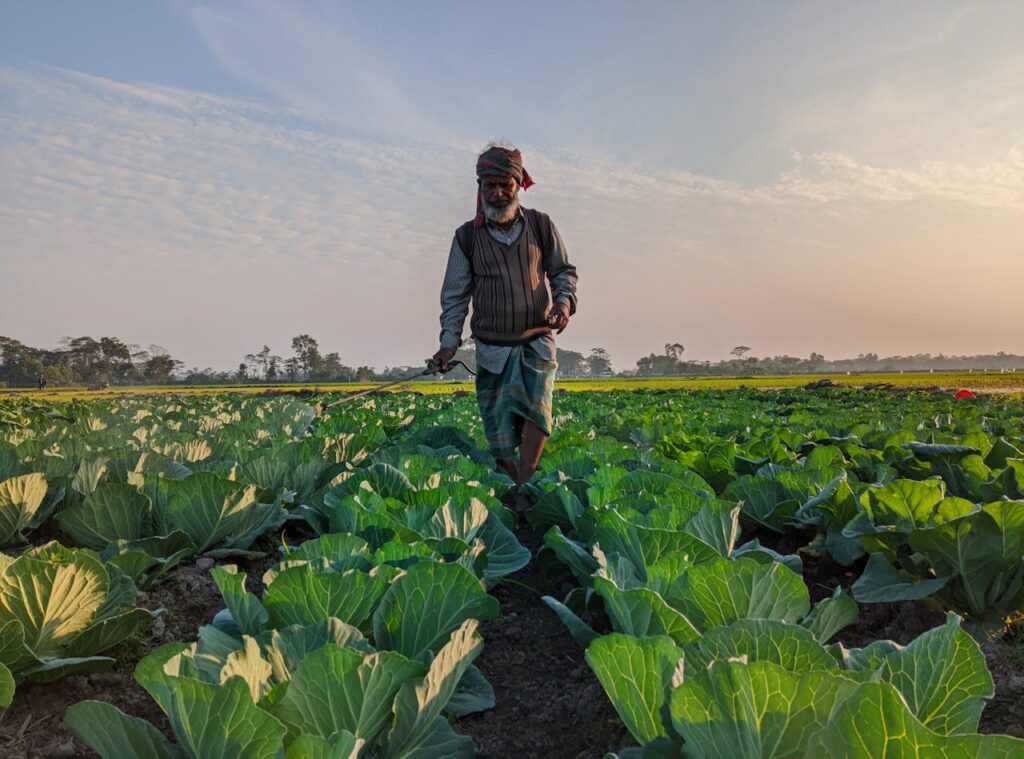
This course examines the connections between water governance, knowledge frameworks, and participatory methods, offering a detailed look at how diverse forms of understanding and collaboration influence decision-making around water resources. Participants will explore how integrating multiple perspectives and disciplines enhances the ability to address water-related challenges effectively and inclusively.
The learning experience begins with “Ways of Knowing Water,” where participants explore how scientific, cultural, and local insights shape approaches to water management. Building on this, “Adaptive Water Governance” focuses on fostering flexibility and resilience in managing resources in changing environments. The following lesson, “Adaptive Water Governance and Learning,” highlights the importance of ongoing reflection and improvement to strengthen governance systems.
The course also covers “Knowledge Co-production and the Science-Policy Interface,” emphasizing joint efforts between practitioners, researchers, and policymakers to align strategies and solutions. It concludes with “The Interdisciplinary Study of Water Governance,” presenting a cultural political economy perspective that integrates social, economic, and political factors into a broader understanding of governance challenges.
This course equips learners with the tools and insights needed to engage with water governance from informed and collaborative viewpoints, preparing them to contribute meaningfully to sustainable water management efforts.
Course Provider
The detailed information about each instructor involved in this course is provided in each lesson.
NEWAVE e-Lecture Series
This course is part of the NEWAVE e-Lecture Series on Water Governance Theoretical Perspectives. This online training module is designed to engage the NEWAVE Early-Stage Researchers (ESRs) and the wider public in interactive, thought-provoking discussions on various water governance theoretical perspectives. Learn more about the e-lecture series here (Link).
Course Content
Ways of Knowing Water – Prof. Margreet Zwarteveen
Knowing water is always a simultaneously social (political, cultural, institutional, historical) and scientific practice. This also means that answers to questions about “what is true?” will be mixed up with opinions about “what is right?” or “what is good?”. Donna Haraway’s notion of knowledge as situated and partial – and her definition of objectivity as being about particular and specific embodiment – provides an interesting way of grappling with this entanglement between science and society. The lecture uses her theoretical proposal to discuss different ways of knowing water. Rather than considering these as different perspectives on the same water, the argument is that these produce different versions of water – or indeed different waters. Such differences should and often cannot be made to disappear through integration or commensuration, which is why there is merit to instead learn how to live with them – even when they are in tension with each other.
Instructor: Prof. Margreet Zwarteveen
Margreet is a Professor of Water Governance at IHE-Delft and the University of Amsterdam. Trained as both an irrigation engineer and a social scientist, Margreet is interested in water allocation policies, technologies and practices, and the knowledges that justify or inform these. She focuses her research and education on questions of (gender-) equity and justice. Her current research includes a project (financed by the Netherlands Organization for Scientific Research, NWO), that looks at the mobility of Dutch Delta experts and expertise to examine the production of evidence under conditions of uncertainty. She is also the coordinator of a large international research network (funded by the Belmont-Norface Programme on Transformations to Sustainability) to study and learn from bottom-up initiatives to protect or share groundwater. In her work, Margreet favors an interdisciplinary approach, seeing water flows and distributions as the outcome of interactions between natures, technologies and people.
Recommended Readings: Ways of Knowing Water
- Jamie Linton.(2008). Is the Hydrologic Cycle Sustainable? A Historical–Geographical Critique of a Modern Concept, Annals of the Association of American Geographers 98(3): 630-649.
- Dominguez-Guzman, C., A. Verzijl and M. Zwarteveen. (2017). Water Footprints and ‘Pozas’: Conversations about Practices and Knowledges of Water Efficiency. Water 9(1):0016.
- Goldman, M.(2007). How “Water for All!” policy became hegemonic: The power of the World Bank and its transnational policy networks. Geoforum 38(5):786-800.
- Taylor, K.S., S. Longboat, R.Q. Grafton. (2019). Whose Rules? A Water Justice Critique of the OECD’s12 Principles on Water Governance. Water 2019, 11(4): 809
- Zwarteveen, M.Z., J. Kemerink-Seyoum, M. Kooy, et al. (2017). Engaging with the politics of water governance. Wiley Interdisciplinary Reviews: Water (September)
Adaptive water governance – Prof. Dave Huitema
Ideas about adaptive management and co-management have influenced the discussion about water governance for a few decades now. In this lecture, we will look at the origins of this way of thinking, its main prescriptions for practice, and reflect on these on the basis of the state of art in the water governance literature more generally.
Instructor: Prof. Dave Huitema
Dave Huitema is professor and chair group holder Public Administration and Policy at Wageningen University and Research. His research is focused on the role of government in accomplishing transformations in the sustainability domain. How can government play a role in facilitating certain ongoing transformations, how could government trigger certain transformations, and how does government need to transform itself in light of desirable transformations? In light of this, Huitema has focused in the past on the ways in which individuals (so called policy entrepreneurs) can consciously affect policy dynamics, learning processes in government (for instance through citizen participation, through evaluation, through serious games, or policy experiments), but he has also focused on the way governments can enhance the societal impact of citizens collectives that seek to introduce more sustainable approaches. Much of the work done by Huitema is aimed at the domains of water management, climate change and energy. Conceptually he connects to theories about policy dynamics, the science-policy interface, adaptive governance and polycentricity. Huitema received his degree from Twente (M.A.and PhD) and previously worked for the Vrije Univeriteit Amsterdam and the Open Universiteit as professor of environmental policy. At the moment Hutema is involved in various ongoing research projects, notably NWO funded project ADAPT-LOCKIN about locked in policy system, NWO-TTW project AquaConnect about circular water management, and the Marie Sklodowska-Curie Action NEWAVE that aims to give an impetus to the global way of thinking about water governance. Huitema teaches in various courses at the WUR and is welcoming students who would like to do research together in his expertise areas.
Recommended readings: Adaptive water governance
References:
- Folke, C., Hahn, T., Olsson, P., & Norberg, J. (2005). Adaptive governance of social-ecological systems. Annu. Rev. Environ. Resour., 30, 441-473.
- Chaffin, B. C., H. Gosnell, and B. A. Cosens. (2014). A decade of adaptive governance scholarship: synthesis and future directions. Ecology and Society 19(3): 56.
- Huitema, D., E. Mostert, W. Egas, S. Moellenkamp, C. Pahl-Wostl, and R. Yalcin. 2009. Adaptive water governance: assessing the institutional prescriptions of adaptive (co-)management from a governance perspective and defining a research agenda. Ecology and Society14(1): 26.
Adaptive water governance and learning – Prof. Andrea Gerlak
Learning helps take into account complex dynamics and uncertainty inherent in water governance and enables interactions between individuals, organizations, agencies and institutions across multiple governance scales. This talk traces the rise and evolution of learning scholarship and its connection to water governance. It highlights how learning is central to a number of theoretical approaches, especially adaptive governance, but also social-ecological systems, climate change adaptation, collaborative governance, and policy change. This talk will highlight how researchers are defining, conceptualizing, and measuring learning, and the challenges inherent in these approaches. In addition, we will investigate what learning looks like in practice – including factors enabling and hindering learning — and what learning means for water governance.
Instructor: Prof. Andrea Gerlak
Andrea K. Gerlak is Professor at the School of Geography, Development & Environment (SGDE) and Director of the Udall Center for Studies in Public Policy, at the University of Arizona. Her research focuses on institutions for governing water resources. She examines cooperation and conflict around water, including questions of institutional change and adaptation to climate change in rivers basins, and human rights and equity issues in water governance.
Gerlak is a senior research fellow with the Earth System Governance Project, an international social science research alliance exploring political solutions and novel, effective governance mechanisms to address global environmental challenges. She recently served as a Lead Author on the Earth Systems Governance Science and Implementation Plan, which sets out the agenda for the next decade of earth system governance research. Her most recent books include Learning for Environmental Governance Insights for a More Adaptive Future, published by Cambridge University Press in 2024 with Tanya Heikkila and The Conversation on Water, published by Johns Hopkins University Press in 2023.
Presently, she serves on the City of Tucson’s Water Advisory Committee. She is a senior fellow with the Earth Systems Governance network. Dr. Gerlak has more two decades of experience leading interdisciplinary environmental studies programs and university-community environmental partnerships. She has consulted on water governance and climate resilience efforts for UNESCO and the WMO.
Recommended readings: Adaptive water governance and learning
References:
- Gerlak, Andrea K. and Tanya Heikkila. (2011). Building a Theory of Learning in Collaboratives: Evidence from the Everglades Restoration Program. Journal of Public Administration Research and Theory 21(4): 619–644.
- Gerlak, Andrea K., Tanya Heikkila, Sharon L. Smolinski, Dave Huitema, Derek Armitage. (2017). Learning our way out of environmental policy problems: a review of the scholarship. Policy Sciences 51(3): 335-371.
- Gerlak, Andrea K., Tanya Heikkila and Jens Newig. (2020). Learning in environmental governance: opportunities for translating theory to practice. Journal of Environmental Policy & Planning.
Recommended readings:
- Heikkila, Tanya and Andrea K. Gerlak. 2024. Learning for Environmental Governance Insights for a More Adaptive Future. Cambridge, UK: Cambridge University Press.
- Hovis, Meredith, Andrea K. Gerlak, Tanya Heikkila, Pam Rittelmeyer, Elizabeth Koebele, Linda Estelí Méndez-Barrientos, and Mark Lubell. 2024. Illuminating the collective learning continuum in the Colorado River Basin Science-Policy Forums. Environmental Policy and Governance. (Link)
Knowledge co-production and the science-policy interface in water governance
– Dr. Julia Martinéz and Dr. Violeta Cabello
This talk covers three interrelated topics with regards to actionability of knowledge for water governance. First, we discuss the type of knowledge required to deal with water governance challenges that are complex, uncertain and underpinned by contested interests. We argue that this knowledge has to be both inter and transdisciplinary and produced in non-linear processes of learning and acting. Second, we introduce the concept of knowledge co-production and situate it within a wider literature of sustainability sciences. Different perspectives on what for and how to co-produce knowledge are explained together with some key principles and limitations to consider when designing a co-production process. Thirdly, we present an overview of the main models of science-policy interaction for water governance from a historical perspective. We then outline the key components of a science-policy interface that uses the ‘best available knowledge’ in deliberative decision-making processes.
Instructors
Dr. Julia Martínez
Julia Martínez, executive director of FNCA and Phd in Biology (University of Murcia) is an ecologist with 30 years research experience on dynamic modelling and simulation of socio-ecological systems, particularly focusing on arid zones, the social, environmental and economic interactions in irrigated systems, the impacts of climate change on biodiversity, the ecology of water-related systems and the integrated water management at basin level. She has coordinated or participated in around 35 national and international research projects on these topics, combining different methodological approaches, such as dynamic system modelling, the development of sustainability indicators and scenario and policy analysis. She is author or co-author of more than 150 scientific publications on these issues. She also has 30 years experience as activist on environmental and water issues and is founding member of different environmental NGOs and citizen initiatives. More information on Julia’s research work at ResearchGate.
Dr. Violeta Cabello
Violeta Cabello is a social-environmental scientist at the Basque Centre for Climate Change. Her research focuses on knowledge co-production, the water-agriculture-ecosystem nexus, and societal polarization around environmental issues. She is currently exploring these topics through the theoretical lenses of feminist posthumanisms and relational-processual approaches within sustainability science. During the NEWAVE project, she collaborated with Paula Zuluaga in a process of collective knowledge generation about the eutrophication of the Mar Menor lagoon (Murcia, Spain). Together, they also engaged in an arts-based research endeavour, exploring how visual language can convey the diverse emotional experiences of the lagoon’s environmental degradation
Recommended Readings: Knowledge co-production and the science-policy interface in water governance
References:
- Miller, C.A., Wyborn, C. (2018). Co-production in global sustainability: Histories and theories. Environmental Science & Policy.
- Norström, A.V., Cvitanovic, C., Löf, M.F., West, S., Wyborn, C., Balvanera, P., Bednarek, A.T., Bennett, E.M., et al. (2020). Principles for knowledge co-production in sustainability research. Nat Sustain 1–9.
- Balvanera P, Jacobs S, Nagendra H, O’Farrell P, Bridgewater P, Crouzat E, Dendoncker N, Goodwin S, Gustafsson S, Kadykalo A, Krug C, Matuk F, Pandit R, Sala JM, Schröter M & Washbourne CL. (2020). The science-policy interface on ecosystems and people: challenges and opportunities, Ecosystems and People, 16:1, 345-353.
- Guittard , A.; Akinsete, E.; Berg, H.; Carter, C.; Kastandi, E.; Karageorgis, A.; Koundouri, P.; Maneas, G.; Martinez-Lopez, J.; Martinez-Fernandez, J.; Papadatos, D.; Tiller, R.; de Vente, J.; Vernier, F. 2024. Using Multi-Actor Labs to drive sustainability transition in coastal-rural region: A comparative analysis. GAIA. Ecological perspectives for science and society, 33(S1): 57-63.
- Martínez-Fernández, J.; Baños-González, I.; Esteve-Selma, M.A. 2021. An integral approach to address socio-ecological systems sustainability and their uncertainties. Science of the Total Environment, 762: 144457
- Chambers, J. M., et al. 2021. Six modes of co-production for sustainability. Nature Sustainability 4:983-996. https://doi.org/10.1038/s41893-021-00…
- Charli-Joseph, L. J.M. Siqueiros-García, H. Eakin, D. Manuel-Navarrete, M. Mazari-Hiriart, R. Shelton, P. Pérez-Belmont, and B. Ruizpalacios. 2022. Enabling collective agency for sustainability transformations through reframing in the Xochimilco social–ecological system. Sustainability Science. https://doi.org/10.1007/s11625-022-01…
The interdisciplinary study of water governance: a cultural political economy perspective
– Prof. Peter Mollinga
Instructor: Prof. Peter Mollinga
Peter Mollinga is a Professor of Development Studies, at the Department of Development Studies SOAS University of London. His research interests are: 1) water and development; 2) the dynamics of agriculture and environmental resources management; 3) interdisciplinarity in efforts at ‘integrated’ natural resources management and governance. His geographical focus is Asia, particularly South Asia and Central Asia. He was trained as an irrigation engineer at Wageningen University, the Netherlands; his Master’s dissertation was on small-scale irrigation management in the Senegal River valley; his Ph.D. is on irrigation water management in South India. He completed his Habilitation in Development Sociology at the University of Bonn, Germany. Since 2010 he is Professor of Development Studies at SOAS University of London, UK, where he also initiated the Centre for Water and Development.
Recommended readings: The interdisciplinary study of water governance: a cultural political economy perspective
References:
- Sum, N. L., & Jessop, B. (2013). ‘Introduction’ in Towards a cultural political economy: Putting culture in its place in political economy. Edward Elgar Publishing. pp. 1-30. (Can be read in Google Books).
- Mollinga, P. P. (2008). Water, politics and development: Framing a political sociology of water resources management. Water Alternatives, 1(1): 7-23 (available online).
- Mollinga, P. P. (2020). Knowledge, context and problemsheds: a critical realist method for interdisciplinary water studies. Water International, 45(5), 388-415.