NEWAVE Career Development Workshop: Preparing to jump into the next career step
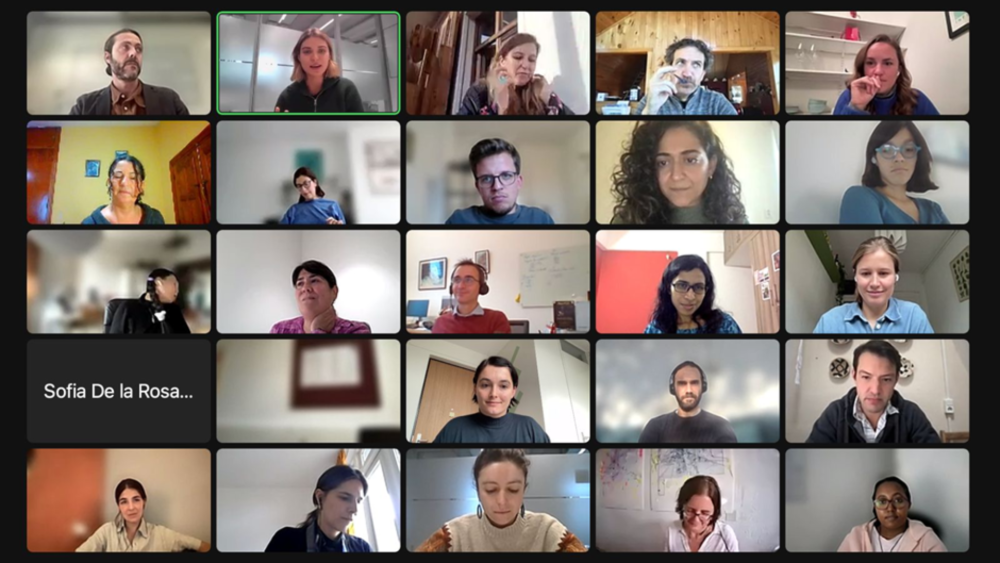
NEWAVE Career Development Workshop: Preparing to jump into the next career step Source: NEWAVE, By Ariadna Romans Approaching the end of their PhDs, early-stage researchers often face the struggles of jumping into their next career step. For this reason, NEWAVE and the 15 Early Stage Researchers (ESRs) organised a Career Development Workshop on the 16th of November 2023. The workshop was intended as a space for the ESRs to reflect on their next career goals, share their concerns and uncertainties about the future and hear the life experiences of researchers and experts in the water sector, as well as consider how NEWAVE is positioned to support them in this transition. We started with breakup rooms where ESRs had the opportunity to exchange with invited senior professionals. After this, the group reconvened in break-up rooms were senior professionals shared their experiences and early-stage researchers were invited to pose questions and concerns about their career development. During the second part of the workshop, we were honoured to welcome the participation of Josh Newton, founder of the renowned platform Josh’s Water Jobs. “A PhD is often seen as the first stage of an academic life but, in my case, it was during my postdoc when I really understood what I wanted to do. Fieldwork research in particular allowed me to see more clearly my professional priorities”. With this reflection, Dr Jampel Dell’Angelo, Principal Investigator and Coordinator of the NEWAVE Network, addressed some of the concerns of early-stage researchers who are now completing their first step as researchers in the water field. In this sense, Dr Sofia de la Rosa, advisor at the Netherlands Enterprise Agency (RVO), expressed that “even if I am very happy where I am now, I would not have known where I wanted to be without doing other things I did not like or enjoy. It is important to understand that failing is also part of the process of figuring things out, despite it can be frustrating at the moment”. At the same time, Prof. François Molle, Directeur de Recherche at the IRD (Institut de Recherche pour le Développement, France), remarked that, in some cases, life gets in the middle of your professional career. Having children, creating a family or having personal issues can be situations one is confronted with. “Academia is about passion, if you are passionate about what you do research is limitless, which is good but it can also overstretch yourself and make it difficult to find a limit”. The group reflections concluded with a masterclass by Dr Josh Newton, creator of the job portal Josh’s Water Jobs, a place where most water scholars have sought for employment at some point in their careers. “There are no wrong decisions here. Any pressures you may feel about what to do or where you would like to be change throughout your life depending on your priorities at the moment. What you are doing at the moment does not necessarily determine your next step”. He also stressed out that “it is a matter of translating the skills you have into something that would be understood in another context. Every move gets you closer to where you want to be, and by little incremental changes you will get closer to the ideal job”. The session was highly valued by its attendees, who stated that they had not only found some comfort in the revelations of the session’s experts but had also found inspiration to continue their professional careers. As Dr Sofia de la Rosa stressed, confidence was key to finding new appointments, so her recommendation for early-stage researchers was “to trust the process”. Another interesting point was made by Dr Nuria Hernández Mora, consultant and senior water policy expert, where she shared that starting to trust herself was a big milestone in her career and that it is only now with some years of experience that she calls herself proudly a “senior water expert” and is confident saying that. Especially for women, insecurities and self-doubting can be a big obstacle on the way to personal success. Dr Julia Martinez-Fernandez, executive director of FNCA (Fundación Nueva Cultura del Agua), also reminded the early-stage researchers about the uncertainty that life in academia has, and not to feel pressured by the initial decisions they take in their professional careers: “The initial decisions are not crucial, see where life takes you. There are plenty of opportunities that do not depend on where you are or what position you are in at the time”. Early-stage researchers had an excellent opportunity to brainstorm their next steps in their careers through the workshop, with professional advice and experience providing insight on both possible paths inside and outside of academia. ESRs will soon be available for their future positions, and it will undoubtedly include some positive things about them and their experience with NEWAVE. It’s critical that this community supports and links them throughout this crucial decision, as they get ready for the closing conference. We look forward to inviting you to the NEWAVE Closing Conference next year in April (date TBC), during which the early-stage researcher’s work will be in the spotlight.
An open space for thoughts to broaden our vision of water
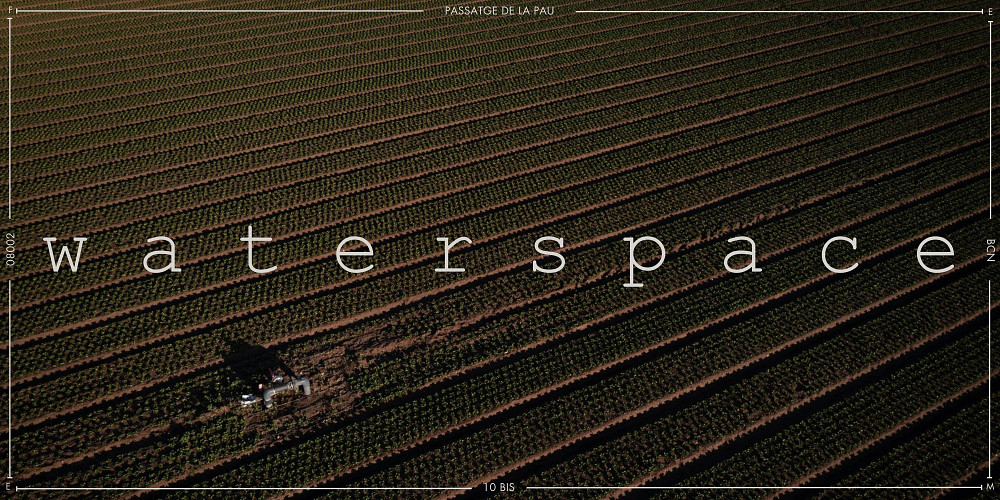
An open space for thoughts to broaden our vision of water Source: NEWAVE, By Ariadna Romans I’ve been thinking about an idea for days: reality is unbreakable. After decades in which hyper-specialisation has been hailed as the great triumph of human progress, we have finally, as a society, concluded that it causes just the opposite effect; it dehumanises us. Only by understanding, albeit in-depth, the piece of puzzle that you know perfectly well, can the awareness of the relationship of dependence towards the other pieces evaporate. Thus, any suspicion of interdependence or need for exchange fades into an arrogant sense of thinking we already know everything there is to know. In the case of water, the fluidity of the resource makes it clear that, no matter how hard one tries, water is unbreakable. Even more, it is precisely its essence to be present everywhere and to be part of all the networks of life without a clear defining line. As an inescapable presence, water flows and permeates every vital presence, shaping all the life surrounding and nourishing us. Water is life, many say, but what life does water give us? And how do we, as a society, relate to this vital resource? From the 13th to the 15th of March, Fundació Enric Miralles (FEM) hosted the second edition of one of the most innovative festivals in this new commitment to interdisciplinary dialogue in the field of water. w a t e r s p a c e, spelled with the premeditated spaces, is a platform that aims to explore the artistic engagements, scientific interactions, and political interfaces with water, that shape our socio-hydrological world. It is co-created by FEM and NEWAVE, an EU-funded Innovative Training Networks (ITN) with coordination at the Vrije University of Amsterdam that aims to open the debate on water governance. Fundación Nueva Cultura del Agua (FNCA) was also a partner of the event, and it had the support of the Ministerio de Transportes, Movilidad y Agenda Urbana (MITMA) and the General Directorate of Urban Agenda and Architecture from the Catalan Government. This year’s event aimed to investigate the artistic engagements, scientific interactions, and political interfaces with water that shape our socio-hydrological world through interdisciplinary interaction between artists, designers, architects, activists and scientists. This year’s event included distinguished architects like Toni Gironès Saderra (Toni Gironès) and Benedetta Tagliabue (Fundació Enric Miralles), renowned experts such as Prof. Leandro del Moral (FNCA), Prof. Beatriz Rodriguez-Labajaos (UPF) and prominent members of the NEWAVE network such as Julia Martínez (FNCA), Jampel Dell’Angelo (principal researcher of NEWAVE), and many others. But the jewel in the crown, beyond the beautiful exhibition hall where the conference was held, was the photography exhibit by photographer and NEWAVE researcher Javier Rodríguez Ros, designed and coordinated by the Enric Miralles Foundation. Under the title “Mares Verdes“, the researcher emphasised the need to comprehend the Segura basin as a paradigm. Far from being just an aesthetic space named the “green sea” that is strategically used to legitimate a modernisation process, the Segura Basin has become a space for an agro-industrial lobby that supplies an international market of horticultural products. The water governance of the Segura Basin must move towards a change of imagination where irrigation does not only reproduce the interests of a few but is presented as a space that gives an opportunity to rethink the relationship that water and politics have with the territory. Thus, Rodríguez Ros mentioned how “the photography process generated a contribution to the way of critically seeing the territory and recognizing, from the sight, the infinite ecosocial interrelations and interdependencies that exist in the irrigated communities”. The images and words that flowed in the w a t e r s p a c e platform allowed both its audience and its active participants to lay their eyes on some of the cases explained but also on some of the shortcomings of the current system. The architect Carles Enrich stated that “Barcelona needs to think of itself as a city from a hydrological perspective”. Other participants, such as the architect and professor Toni Gironès, emphasised the need to “do more pedagogy on the importance of the four elements” in our urban governance. Sustainability researcher and performing artist, María Heras captured the key point, stating that as a species “we are very bad at anticipating, but very good at adapting”. The exhibition will be open to the public until the 31 May, and the work of the researchers, artists, and architects who participated can be followed on on the NEWAVE and Fundació Enric Miralles channels. As an attempt of a laboratory of thought, places like w a t e r s p a c e offer the indispensable excuse to think about the necessity to broaden our vision of water. This article was originally published in Catalan and Spanish in VIA Empresa.
NEWAVE First Training Event
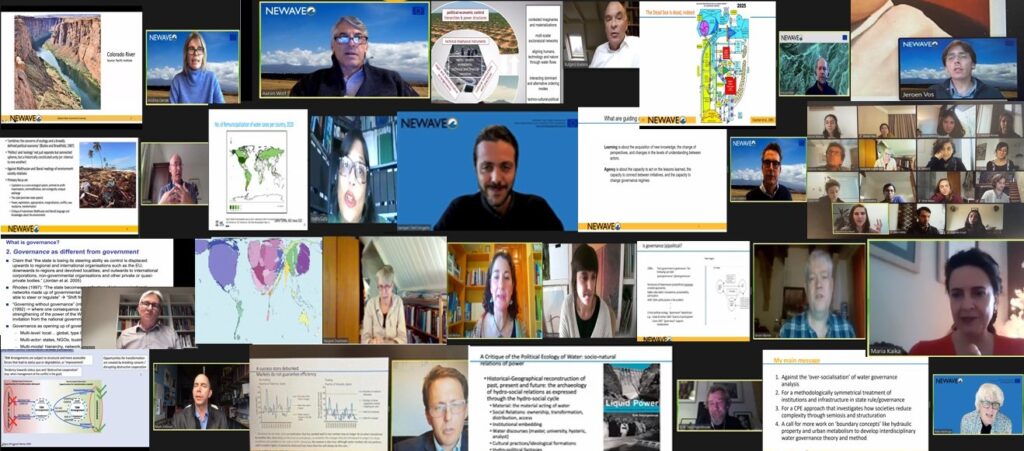
NEWAVE First Training Event Source: NEWAVE, By Bárbara Kyling Sánchez From Nov 17 to Dec 17, 2020, NEWAVE hosted its first online training activity: e-Lecture Series on Water Governance Theoretical Perspectives. This online training module had the objective to engage the NEWAVE Early-Stage Researchers (ESRs) and the wider public in interactive and thought-provoking discussions on different water governance theoretical perspectives. The activity saw the participation of a truly international and transdisciplinary audience. All e-lectures were free and open to the public upon registration, with the possibility to request a certificate of participation. NEWAVE’s first online training module has proved a great outreach success, receiving more than 1,600 registrations from more than 112 countries. High participation rates were visible throughout the entire month with an average of over 330 participants per session. NEWAVE e-Lecture Series Participation Map NEWAVE e-Lecture Series Attendance Curve (*Sessions 6 and 8 had only one lecture) Despite the challenging times related to the Covid-19 pandemic, the event experienced an impressive engagement and support of a global community of water enthusiasts who raised over 545 questions throughout the entire series. Interacting with such an audience was not only an exciting and fulfilling experience but also revealed the opportunities and powerful aspects that digital tools can bring to education. While teaching & learning via a camera might have its disadvantages, it does allow people from literally everywhere to connect and learn from one another, and particularly to keep educational programmes ongoing when it would be physically impossible to do otherwise. “Starting a Ph.D. during a pandemic is unsettling and rather challenging, in the sense of not being able to physically and mentally connect to the location of the Ph.D. program, your supervisors, and your peers. Thankfully, the shift of the NEWAVE lecture series to an online format as a first intensive and grounding experience provided a sense of connection with colleagues and offered direct links and discussions with reputed scholars who are leading in the field on water and environmental governance. This experience while mentally stimulating also offered a process of bringing us closer as a group, albeit all through Zoom calls.”, reflected Dona Geagea, NEWAVE ESR 10 and Ph.D. fellow at Vrije Universiteit Amsterdam. Feeling similarly, Alejandra Burchard, NEWAVE ESR 9 and P.hD. fellow at ARCADIS Netherlands echoed: “I really enjoyed the first Newave e-Lecture Series on Water Governance Theoretical Perspectives! As I start my Ph.D. on water governance, coming from a more technical and management background, these lectures really expanded my view on water governance stimulating critical thinking through new lenses. Even though the lectures were online, the reading lists, the presentations, the moderation, and moments for discussion allowed us participants to really engage with the content. It was a great and impactful e-learning experience for me.” NEWAVE team highly values the inputs, comments, and the time participants took to answer the feedback survey, and is thankful to have received such impressive positive responses. We are pleased to hear that opening the lectures to the public helped many students, researchers, and water practitioners in their endeavours. “The NEWAVE e-Lecture Series offered me an unexpected anchor as I went through the water governance literature for my master’s thesis. As the field is notably complex and still fledgling, it was especially helpful to get an overview of the differing perspectives used to make sense of water governance in an insight-rich and engaging way. I often found myself following up afterwards on the literature or ideas presented” stated Willow Sommer, M.Sc. Student at the University of Freiburg. “Tuning in every Tuesday and Thursday at 6 am from Arizona was something, but also totally worth it! Can’t wait for the recordings to be released and future events from this network!” added on the Twitter channel Adam, Ph.D. Student. NEWAVE will consider the comments and suggestions given by the participants for further improvement. We are tremendously grateful for the time and dedication of the lecturers, ESRs, host and partner organisations, and all the participants that joined and supported the network during this 1-month online intensive course. We look forward to seeing you again in the upcoming activities. About the e-Lecture Series: The e-Lecture Series on Water Governance Theoretical Perspectives consisted of 18 lectures that were organized on a bi-weekly basis, every Tuesday and Thursday afternoon CET via Zoom. Each day, two renowned experts in the water field presented their topic, followed by a brief and open discussion aimed at stimulating critical and transdisciplinary thinking. The detailed programme of the e-Lecture Series and the list of recommended readings are available here.
NEWAVE Side Events at the UN 2023 Water Conference

NEWAVE Side Events at the UN 2023 Water Conference Source: NEWAVE, By Paulina Raniecka During the UN 2023 Water Conference, NEWAVE organized two virtual side-events. The two side events focused on the themes of governance in contentious socio-hydrological contexts and reflexivity in research practices in water governance. We invite you to read the recap of the two sessions below. The first event titled “Rival waters: governance in contentious socio-hydrological contexts” took place on the second day of the Conference (22 March, 2023). The session centered around the notion of water (in)justice within different contexts, introducing diverse water specialists from academia. Dr Hernández-Mora discussed the theme of conflicts surrounding hydraulic infrastructures. Dr Puma focused on groundwater depletion in the context of domestic agricultural production and imports. Water grabbing was the topic of the presentation delivered by Prof. Rulli, while water appropriation through hydraulic infrastructures was the central theme discussed by Prof. D’Odorico. Similarly, Prof. Selby brought in specific cases of water grabbing in contentious hydro-political contexts in recent years. Lastly, Prof. Dell’Angelo brought in the contested notion of water wars, ending his presentation with the theme of water grabbing. The flash talks were followed by a dynamic panel discussion moderated by Prof. Maria Rusca. The second virtual side-event was organized by a number of NEWAVE ESRs. Titled “Overcoming Obstacles for Reflexive Research Practice in Water Governance”, this session took place on the second day of the Conference (24 March). This ESR-led event discussed the notion of reflexivity and emphasized the need for consideration for critical perspectives. The session was born out of the experiences of 15 NEWAVE Early-Stage Researchers, covering 15 unique research projects on water governance who experienced both opportunities and challenges for reflexivity in water governance research. The event was held in both English and Spanish and the list of panelists included: Siddharth Agarwal, Founder of Veditum India Foundation; Neil Dhot, Executive Director at AquaFed; Ricardo Camilo Niño Izquierdo, Technical Secretary at Comisión Nacional de Territorios Indígenas; Sarah Van Borek, Postdoctoral Fellow at University of Toronto.